People
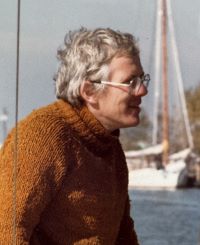
Obituary-Christopher Roper, correspondent who broke the death of Che Guevara
Wednesday 15 July 2026
Christopher Roper, who has died aged 86, was the young Reuters reporter who broke the news of the death of Che Guevara in the Bolivian jungle.
He went on to have a long and varied career in publishing and tech start-ups.
Roper, who died at his home in West Dorset on May 6 after a brief illness, joined Reuters in 1964 at the age of 24, not long after graduating from Cambridge. He stayed until the end of 1968.
Despite his short time at the Baron, he saw plenty of action, covering three military coups: in Algeria (1965), Argentina (1966) and Peru (1968). Most importantly, he had a ringside seat on history in the scrubby forests of eastern Bolivia in October 1967.
As the Reuters correspondent in Lima, Christopher’s territory also covered Bolivia, where Ernesto “Che” Guevara launched his final revolutionary insurgency in 1966.
Thanks to what he described as “a mixture of outrageously good luck and youthful opportunism”, he was in the town of Vallegrande when the executed body of Guevara was brought in strapped to the landing gear of a helicopter.
He beat rivals AP and AFP by 24 hours, and his scoop earned him front-page bylines in both The New York Times and Izvestia. His achievement was recorded in the 2001 Reuters book Frontlines.
Although he left Reuters soon afterwards, Christopher remained a journalist at heart, and he took the skills he honed as a reporter into each of his businesses.
His experience living in both Lima and Buenos Aires instilled in him a deep fascination with Latin America and, after leaving Reuters, he joined a small group of journalists publishing Latin American Newsletters.
The London-based service built up a network of continent-wide correspondents and kept the world informed about the region in the 1970s, when many nations were under strict military rule.
Throughout his life, Roper relished taking risks, whether that was betting on horses and greyhounds, investing in startups, or zip-wiring (unsuccessfully) into the River Cam in his undergraduate days.
In the 1980s, that appetite for risk led him into the world of computers. Although he was no techie, he was quick to see the potential of information technology.
His first computing venture was Logotron, which became the UK’s leading supplier of educational software to primary schools.
After selling Logotron to the publisher Longman, he turned his attention to maps and geographical information systems.
In the mid-1990s, he co-founded the Landmark Information Group in Exeter, with the idea of building a geographic database that would allow environmental consultants and other professionals to assess the risks associated with any plot of land.
A few years later, the business was sold to the media conglomerate DMGT.
There was a celebration of Christopher’s life on June 29 at Forde Abbey, the former Cistercian monastery in Dorset where he was born and spent his childhood.
He is survived by his wife, Janie, his stepchildren, Lucy and Mischa, and his son, William. ■
- « Previous
- Next »
- 22 of 634