The Baron's Briefings
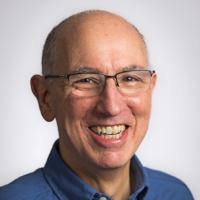
Simon Alterman's posting to Chile - a tale of two countries
Sunday 15 February 2026
For Simon Alterman’s first solo posting, Chile offered the chance to live in a beautiful place, but also a country led by a brutal dictator who had gone after journalists and dissidents and ordered the disappearance of thousands of people after the 1973 military coup.
Alterman was sent to Santiago in 1983 after only two-and-a half years at Reuters: “Very well trained, but not fully prepared,” he told the latest Baron’s Briefing.
In an entertaining talk, he said he was warned about the risk by Reuters colleague Bernd Debusmann, a veteran of several wars and then based with him in Mexico.
“He looked at me and said: ‘Chile. That's a very interesting posting. So, if you do your job properly, you will either be expelled or shot.’”
Alterman survived without being “disappeared,” but not without the occasional close shave. President Augusto Pinochet regarded all opposition or critical journalists as communists and they were often targeted by riot police during demonstrations.
He told of one story that got him in frighteningly hot water when he wrote about Pinochet sacking his senior cabinet minister, with whom he had an ongoing feud. What happened to his story when it was published in an Argentinian newspaper is the kind of desk tinkering that gives reporters nightmares.
“At the bottom of the story were two paragraphs that I hadn't written that said the contest between Pinochet and his minister was like two gorillas fighting…and Pinochet was the biggest gorilla in the jungle,” Alterman said. Pinochet officials called in a rage. There were a few uncomfortable hours before the newspaper admitted it had added the offending paragraphs, and apologized.
Pinochet cut an imposing figure, but spoke in a surprisingly high voice. At his annual breakfast with foreign press, their tape recorders were taken when they entered. Alterman managed to keep his during one briefing and used the recording to write a story that corrected the official transcript of what the president had said about his future.
The transcript quoted him as saying: “What may happen to me, history will say.”
“Well, my recording said: ‘What will happen to me? Let them kill me. I'm a soldier. I'm prepared.’ Which is I think a much better story,” Alterman said.
A decade after the overthrow of socialist President Salvador Allende in a bloody coup, things were a lot calmer. But demonstrators and journalists regularly faced tear-gas and police batons cracking heads. In poorer neighborhoods, random gunfire took lives and wounded many.
There was also the shocking murder of three Communist Party members who had their throats cut. Two of them were abducted in front of a school one kilometre from where Alterman lived.
He also had a brief encounter with Nazi war criminal Walther Rauff, who had taken refuge in Chile in 1958. He died a few months later and a giant swastika wreath came up the street where he lived, right next door to the Lutheran church. Rauff was later shown to have been actively involved in the bloody repression after the coup, crimes for which he was never tried.
Because of the brutality of the coup and the widespread sympathy for Allende, relatively small events in Chile attracted a great deal of international attention, in contrast to some other South American countries.
Towards the end of his posting there were two major natural disasters in 1985. The first in Chile, where a huge earthquake made nearly a million people homeless and killed 200, and then when he was sent to Colombia to cover a volcanic eruption and landslide which killed more than 23,000 people in the town of Armero.
Despite the turmoil, Alterman looks back on his days in Chile with deep fondness. It was his first big assignment and a career-defining tour of duty. While in the country, he married his Polish wife, Malgosia, and their son Thomas was born there.
“I should just say that life in Chile was wonderful. I mean on a personal level, despite terrible things going on from time to time,” he said. “But it's a beautiful country…extraordinary geography, magnificent scenery, delightful people, and quality wine that was little known.”
The coast and ski resorts were less than an hour away and there was “the occasional cricket at the Prince of Wales Country Club against the backdrop of the Andes”.
Pinochet finally stood down in 1990. He too never stood trial for the crimes committed. Chile has become a stable democracy and the economy has thrived as democratic governments have largely maintained the open free-trade model they inherited. But inequality has led recently to social unrest.
The presidential election at the end of 2025 was won by Pinochet-apologist Jose Antonio Kaast, the first far-right president since democracy returned.
The kidnapping of Venezuelan President Maduro by the Trump administration is not likely to disturb the relative tranquility of South America, Alterman said.
“There's no question that Trump is trying to secure what he considers to be the backyard,” he said. Kaast and others already have his backing, while many are keen not to antagonize him. Cuba and Nicaragua are vehemently opposed. The situation is stable now, but Trump remains unpredictable, Alterman said. ■