News
Reuters sweeps world with photo of former Prince Andrew
Saturday 21 February 2026
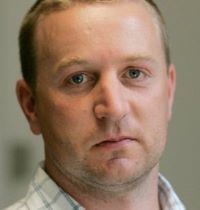
Reuters photographer Phil Noble dominated front pages and websites around the world with an historic photo of the former Prince Andrew as he was driven away from a police station after being arrested.
The exclusive photo of Andrew Mountbatten-Windsor dominated front pages in the UK and elsewhere after the sensational news that a member of the British royal family had been arrested for the first time in nearly 400 years.
It showed the former prince dejected and slumped in the back seat of his car and made veteran photographer Noble himself the subject of several news stories. The red eye effect in Noble’s image – which photographers usually try to avoid – added to the impact.
Papers that had at first failed even to credit the picture to Reuters wrote about Noble after the agency put out a story giving the details of how he got the scoop.
Many former and serving Reuters journalists rejoiced that the photo showed off traditional journalistic skills in an age of social media pictures taken by members of the public on mobile phones and online influencers with no journalistic credentials.
Noble put it best: “It was a proper old school news day, a guy being arrested, who can we call, tracking him down,” he said.
"In a climate where photographers are everywhere, it's rare for one outlet to get one key moment like that."
He called it more luck than judgement, but one veteran cited the old adage “Good luck is what happens when preparation meets opportunity,” which was certainly borne out by Noble’s account.
The photographer had driven six hours from his base in northern England after Mountbatten-Windsor was arrested early in the morning of Thursday at his residence on the royal Sandringham estate. He could have been taken to around 20 different police stations and there were no public details of which one it was.
So Noble worked his contacts and got a tip that the market town of Aylsham was the place.
He waited six or seven hours with his colleague, Reuters video journalist Marissa Davison, until it got dark and Noble started to think they had the wrong police station.
So he had left to head back to a hotel where they had booked rooms for the night, when Davison phoned to say the former prince’s cars had arrived.
Noble raced back just in time to see two vehicles driving away at high speed. Having previously prepared his camera for the shot and guessing that the second car was most likely to contain Mountbatten-Windsor, he fired off six frames almost blindly. He only knew he had hit the jackpot when he reviewed the images on his camera.
Two shots showed police, two were blank, one was out of focus but one was the image that swept the world.
"You can plan and use your experience and know roughly what you need to do, but still everything needs to align," said Noble. "When you're doing car shots it's more luck than judgment."
As the picture swept almost all British newspapers and many others, the BBC moved two separate stories on the picture. The London Times and Irish Times were among others that did similar, and a Guardian picture editor made a video explaining the skills that made it possible, calling Noble's work "a masterclass". ■
- « Previous
- Next »
- 13 of 2191