People
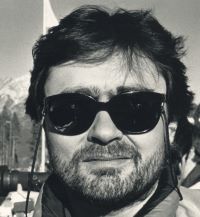
Obituary-David Viggers-Senior Photographer and Master Photo Editor
Thursday 9 April 2026
David Viggers, who held several senior roles during a 23-year career in Reuters Pictures and who was a master at transforming images with a "tight crop", died on March 28 from cancer. He was 71.
David joined Reuters in early 1985, when the agency's first Pictures desk opened in Brussels and left in 2008 to return to his first love of painting and sculpture.
He was Chief Photographer in Italy from 1986 to 1989, then later UKI Pictures Editor -- where he helped launch a domestic pictures service. In 2000 he became EMEA Pictures News Editor, organising among other stories coverage of the Iraq War. Sending colleagues into danger affected him deeply and he was part of a Reuters delegation that went to the Pentagon during the war to protest over U.S. soldiers firing on locally hired journalists and photographers.
He returned to the London Bureau to run UKI Pictures in 2005.
Former colleagues said he was an expert photo editor who taught his staff how to transform an image during editing. “I viewed David as one of the picture industry’s best editors and a master of the tight crop, often pulling a winning picture from an unlikely image,” said Steve Crisp, a former senior photographer at Reuters.
Colleagues paid tribute to his loyalty to his staff but said he was a highly competitive and demanding boss with a quick temper, who expected the best and would not tolerate mediocrity.
But he often used his wicked, ironic sense of humour to puncture difficult moments and in a self-deprecating touch had a model of the Fat Controller from Thomas the Tank Engine glued to the top of his computer screen.
Another colleague, Russell Boyce said: “He allowed you to learn from your mistakes, once. You didn’t repeat a failure…If a photographer didn’t meet his standards, they were soon gone.”
But those that did make the grade shared in the pride of winning “armfuls” of awards, Boyce said.
Fellow photographer Kevin Coombs said: “David was fiercely competitive but just as fiercely loyal to his photographers, backing them at every turn and giving them the space to do their best work.”
He would yell his delight when Reuters won a story and pinned up front pages in office corridors so that senior managers could see them.
David broke into news photography when he accompanied his partner, Reuters journalist Clare Lovell, on her trainee posting in Rome. He was doing odd jobs, including painting and decorating, when news came into the bureau of the 1980 Irpinia earthquake in southern Italy. Grabbing a borrowed camera, he jumped in a car with correspondent Nick Kotch and they drove to the disaster, in which around 2,800 people died.
His pictures were widely used, especially in North America, and he bought a Nikon with his earnings. When Clare was posted to Portugal in 1982, David got a job as a retained stringer with AP in Lisbon.
He met Crisp when they were both covering Pope John Paul II’s 1982 pilgrimage to Santiago di Compostela in Spain, Steve for UPI and David for AP. They became friends and David joined Steve in the new Reuters pictures operation when it was launched in 1985.
Dylan Martinez, a Reuters colleague and friend, said: “David was a formidable, larger-than-life character who hated ‘dull’. He demanded excellence in everything from photographers to wine to food to music to art. He had a profound impact on many lives and will be sorely missed.”
David leaves his wife Clare, a son Ben, a daughter Beatrix and a new baby granddaughter.
■
- « Previous
- Next »
- 47 of 634