People
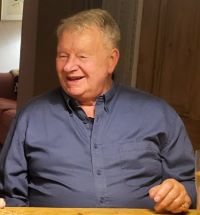
Obituary-Tony Winning, senior Reuters editor on four continents
Friday 14 August 2026
Robert Anthony Winning, who died aged 82 in London on August 8, had a distinguished 32-year career on four continents in some of Reuters most senior editorial positions.
Known to all as Tony, he rode a wave of decentralisation to become the first Editor, Africa, in 1982, then Editor Latin America in 1984 and ended his 32-year career in Singapore as Editor Asia. He retired to London in 2000.
He joined Reuters in 1968 after cutting his teeth in a Harrogate-based regional newspaper group. “The best possible place to go because it had a proper editor who was a real old-fashioned journalist,” he told his family recently.
Postings to Paris and Brussels honed his command of French and feel for the politics of change in the members of the European Economic Community (EEC), as it was then known. Reporting highlights included one early slot shift in November 1970, when a muffled source’s voice on the phone said something he didn’t catch at first. “De Gaulle is dead,” the caller repeated. Tony filed the news flash. “It was a genuine scoop, and very scary,” he recalled.
On a plum assignment to cover Mick Jagger’s wedding in the south of France, he booked a room in the same hotel as the rockstar’s parents and racked up Reuters’ largest one-day expenses bill at the time.
As News Editor, France, in 1975 he oversaw a diverse file of General News that ranged from cooking, through culture, to the political upheavals which pitted the right and centre against Francois Mitterrand’s left. He loved France, its food and wine, and lived with his wife Fay and their four boys in a sprawling apartment in Montmartre, from where he could hear the frequent shootouts between gangs which ran the area’s crime, prostitution and extortion.
He became Chief Correspondent in Madrid in 1978, where he led papers across Europe with his coverage of an attempt by Basque nationalist politicians to disrupt an address by the King. He also oversaw coverage of the 1981 attempted military coup.
As decentralisation in Reuters gathered pace in 1981-82, he was made Editor for Africa, first in London and then in Nairobi. Africa was then something of a Cinderella for Reuters in output and infrastructure. But with a sign on his desk saying: “Winning isn’t everything, it’s the only thing,” he established an Africa Desk of English and French sub-editors, headed by his Francophile friend Terry Williams.
It was a challenge. There was initially no furniture for the Africa Desk and only the most basic of editing equipment at a time when much of the file came in, and went out, in the form of telex. Until then the Africa file had been dominated by coups, and apartheid in South Africa. But under his stewardship it grew in content and confidence from a few hundred words a day to 14,000 -- matching the economic, political and cultural coverage of the other regions in both words and pictures.
In 1986 he was appointed Editor, Latin America & the Caribbean and set about expanding and deepening the LATAM news and pictures file from a headquarters in Buenos Aires with the same determination he brought to Africa. Tony and the family arrived just a few hours before Diego Maradona’s victorious World Cup team. “Fortunately, we got clear of the airport before they arrived. Otherwise, I think we'd still be there,” he joked.
On return to London in 1989 he became Deputy Chief News Editor, where he played a significant day-to-day part in modernising Reuters pictures and video content to cement the company’s position as a dominant multi-media global information provider. Then followed a stint as Production Editor, a job managing editorial equipment for which he freely admitted he was not suited. On one occasion, while overseeing a software upgrade, the London editorial system went offline. “Not even the Luftwaffe managed that. Fortunately, it came back online quickly, but it was clear that this was not my forte.”
He moved on to become News Editor Europe, a job much more up his street, at a time of turmoil in the Balkans.
His final role at Reuters was to become Editor Asia in Singapore in 1997, following the handover of Hong Kong. There he brought his knowledge of what regional editing centres could bring to the local and international file, as well as Reuters’ balance sheet. He visited most of the region’s bureaus, often with his wife, for a first-hand look at staffing, housing and management. Islamabad staff set up a huge screen around the Chief Correspondent’s house for their visit to host an evening of food and (outlawed alcoholic) drink, which was attended by key figures from the government, media and business.
After leading news operations across four continents, retirement was an easy decision. But while the professional links with Reuters ended, the social bonds with former colleagues flourished.
He jokingly referred to Reuters as the family news agency, not least because two of his sons, Andrew and Nicholas, had worked at the agency during his tenure, as chief photographer in Mexico, and reporter in London, Dublin and Sao Paulo, respectively. Tony was an enthusiastic member of an investment club with former colleagues in London and heavily involved in the pensions groups for UK-based former senior Reuters employees. He enjoyed reunions with former Paris bureau journalists to reminisce about the pinball sessions when the bar was an extension of the office.
Ever the pragmatist, a few days before he died he explained it wasn’t idealism that led him to pursue a career in journalism. “In those days it was a solid job. You got to be an indentured apprentice, which the local paper took seriously. And as soon as we could, we spread our wings and looked for jobs in the wider world with the media.”
Tony is survived by his wife Fay, and sons, Nicholas, Peter and Christopher. His oldest son Andrew died in 2020 in the same South London hospice as Tony, who had cancer. ■
- « Previous
- Next »
- 10 of 624