People
Reuters Memories of 9/11
Sunday 16 August 2026
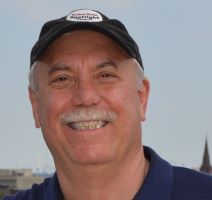
Ahead of the 25th anniversary of the 9/11 attacks, veteran Washington desker Phil Barbara was asked by a friend to speak to a group of Vietnam veterans about the Reuters coverage of that dramatic day. He canvassed 30 former colleagues and below are some of their stories in an abbreviated version of his talk.
On Sept. 11, 2001, hijackers crashed airliners into New York City’s World Trade Center, the Pentagon, and a Pennsylvania field. The attacks killed nearly 3,000 people, traumatizing America and triggering the U.S war on terrorism, whose massive global impact persists to this day. Below are some of the memories of Reuters colleagues who covered the story that day and during the weeks that followed:
Many remembered the vivid clear blue skies over New York and Washington before the attacks. But after the first plane hit at 8.46 a.m., the New York sky began filling with black smoke billowing from a hole in the World Trade Center’s North Tower.
When the second plane hit at 9:03 a.m., 17 minutes later, we knew that terrorism, which Reuters had covered for decades overseas, had come to the United States. From that moment, all day and night, Reuters journalists worldwide, stunned like everyone else, responded to the death and destruction with thousands of stories describing what had happened and trying to explain or analyze it.
I arrived at the World Desk in Washington minutes after the first explosion. With my colleagues Sonya Hepinstall and Mary Gabriel, I watched the second plane hit.
One floor below, in the Washington reporting bureau, Economics Editor Sarah Edmonds and correspondent Susan Pleming saw CNN cut to the live images of the North Tower. Before they could agree on what had happened, the second plane hit. Within seconds, they and other reporters began making urgent calls. Edmonds reached the FAA. (Federal Aviation Administration). “The duty officer … sounded utterly shell-shocked and was unable to answer even basic questions,” she remembers.
David Schlesinger, Reuters executive editor for the Americas, was in Europe with colleagues but spent the rest of the day monitoring and in contact with staff back home. “As in any big story, the first decision was to figure out what we actually knew, what could be confirmed, and what met our standards to be published. Out of chaos, you have to hold on to the facts.”
Schlesinger had something else to consider: New York City housed Reuters American headquarters, where hundreds of staff, their families, sources, and friends would be affected. He said he had “to attend to the many acute needs of the personal while keeping the agency focused, competitive, and professional on the story.”
The New York bureau is a place where Reuters journalists from around the world frequently come and go. One staffer went around getting the names of everyone present in case the building was attacked. Editors also ordered that the blinds be closed because a blast would send window glass flying.
Two reporters, Arshad Mohammed and Steve Holland, were with President George W. Bush in Florida. Bush was seated in a classroom while second graders read “My Pet Goat” when his chief of staff, Andrew Card, whispered in his ear that America was being attacked.
Mohammed, in the media pool, called out: “Mr. President, are you aware of the reports of a plane crash in New York?” The president remained outwardly calm and continued to listen to the students. After several minutes, he got up, and everyone went to another room, where he announced: “Today we’ve had a national tragedy. Two airplanes have crashed into the World Trade Center in an apparent terrorist attack on our country.”
When journalists went to board Air Force One, security agents and sniffer dogs checked the reporters at the foot of the stairs – even though they’d already been screened. The president’s plane flew to a secret location, Barksdale Air Force Base in Louisiana. When it landed, soldiers encircled it. Reporters were barred from using their cell phones for fear the calls could give away Bush’s location. Once news of his arrival at Barksdale had been broadcast on local TV, journalists were told they could call their editors. Bush then flew on to Washington.
Another White House correspondent, Randy Mikkelsen, remembers seeing towering clouds of black smoke billowing up from the direction of the National Mall. He called in to the DC bureau to dictate a bulletin, which was swiftly sent around the world. But the smoke wasn’t from the Mall—it was from the crash at the Pentagon. “The fog of war,” Randy said, got him to push his “facts” a bit harder than what he could immediately confirm.
Pat Rizzo, Northeastern US bureau chief, sent a half-dozen reporters around New York; they raced to the Trade Center, to hospitals, City Hall, and other strategic spots that could be potential targets.
On the Pictures Desk in Washington, when editor Herman Beals heard that airliners were diverting to Newfoundland, he called the Toronto bureau to ask Canada to send reporters and photographers there. Later, when he saw a live CNN broadcast of victims leaping from a tower, he got videotape from the TV desk and converted images into still photographs, some of the most gut-wrenching news pictures in history.
At the New York office, senior editors decided to call Europe and Canada for reinforcements. Canadian staff drove or rode by rail to Manhattan. Correspondent Paul Holmes flew from Europe to Montreal, rented a car, and slept in a motel in the Adirondacks before reaching New York.
Photographer Peter Morgan, who had raced from Midtown to the Twin Towers after the first plane hit, for days took remarkable images from around Ground Zero. Many were published in a Reuters picture book entitled “September 11 – a testimony.”
One picture in the book, taken by Washington photographer Larry Downing, received extensive praise. From the first day on, he hovered around the stricken Pentagon, taking pictures from every angle. One morning shortly after 5 a.m., he staked out a position across a highway that gave him a perfect overview of the Pentagon’s damaged facade. The higher position allowed him to include the Capitol in the background.
“The sun was just about to rise over the nation’s capital,” he remembers. “The smoke … had cleared enough to take what I thought to be a ‘beauty’ picture of the building and all its damage.” The rising sun cast the yellow and golden hues of dawn behind the Capitol Dome.
Congressional correspondent Tom Ferraro arrived at the U.S. Capitol at about 9:30 a.m. As he turned his car into a parking lot, a Capitol policeman, figuring the building could be a target, asked with a blank expression, “Are you sure you want to come in here?” As it were, many lawmakers were at secure locations or had stayed at home.
Ted D’Afflisio, a senior reporter commuting from New Jersey, could get no farther than the Jersey City landings on the Hudson River across from lower Manhattan. Boats were arriving, carrying what in a war zone would be, to Vietnam War veteran D’Afflisio, the walking wounded. Stunned survivors stepped ashore, their shirts bloodied and soiled with dust. D’Afflisio saw a firefighter seated on a bench, looking back across the river to lower Manhattan.
“I approached him slowly,” Ted said. “The man looked ageless, covered by dirt, grime, the residue of sweat that had produced some kind of substance that had etched into every pore in his face, producing a mask of pain. I spoke as softly as I could to ask if he wanted to talk.
“The man wasn’t angry. He didn’t respond with words. He just shrugged his shoulders and waved me away. He returned to whatever private hell he was reimagining. I had seen his look before in Vietnam when soldiers returned as victims of mortar attacks.”
The hit to the economy was also of major concern. Edmonds said that Reuters was first to issue “the all-important alert to the wires that the Federal Reserve would keep open the discount window for banks to access funds to ensure financial stability.”
Reuters had long held to a policy of not labeling militants as ‘terrorists.’ A reporter could quote a source who said an attacker was a terrorist, but otherwise had to use terms like militants, radicals or extremists. The policy rested on the rationale that one person’s terrorist could be another person’s freedom fighter. In this way, Reuters maintained its global reputation as the gold standard in objectivity, but it caused resentment and controversy in America after the attacks.
In the trunk story on Sept. 11, Alan Elsner and the late Arthur Spiegelman used the president’s quotes to describe the ‘acts of terror’ and ‘terrorist attacks.’ They referred to Osama bin Laden as an ‘Islamic militant’ and ‘renegade Saudi.’ The policy was widely criticized by opinion makers and politicians in America.
The late Charlie Aldinger, dean of Pentagon correspondents, was determined to examine the damage to the side of the building despite military police blocking the way. His colleague Tim Dobbyn told me: “Aldinger simply marched on right past the MPs, even as one officer shouted, ‘Hey, are you a doctor’?” Aldinger nodded and kept going.
I left for home on 9/11 at 7:30 p.m. The streets of Washington were empty. Normally, at that hour, 14th Street outbound to Virginia is a river of steel on wheels, but there were no cars. There were no pedestrians. The desolation struck me like the scene in the apocalyptic movie “On the Beach,” when a U.S. submarine arrived in San Francisco Bay after a global nuclear war. The sub’s captain, played by Gregory Peck, looked out the periscope to see that the streets of the city were deserted. Everyone was dead.
On this evening, a cab picked me up and took me to the Methodist church in Alexandria, where my wife, Deb, and our kids, Zachary and Grace, were attending an interfaith ceremony. My kids were outside on the church steps watching for me. When I stepped out of the cab, they ran to me.
The last word is from Capitol Hill correspondent Ferraro: "The events of this cool September morning … reset the agenda for Congress, the United States, and the world for decades to come.”
■
- « Previous
- Next »
- 1 of 620