The Baron's Briefings
John Suchet
Thursday 11 December 2025
The prominent broadcaster John Suchet told the latest Baron’s Briefing that he had impulsively left Reuters too early after thinking he had blown his career.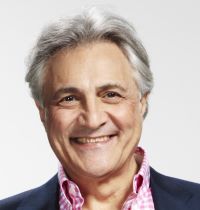
“I regret it to this day,” he said in an amusing online briefing on December 9, adding that he had learned vital lessons at Reuters that lasted him throughout his career, including the overwhelming importance of accuracy. “Something I never forgot,” he said.
After he graduated from university in 1967, John said he desperately wanted to work as a television journalist reporting from hot spots around the world, and Reuters -- then without a television service -- was his third choice after the BBC and ITN.
He didn’t even get an interview with the two major broadcasters. But he was surprised to be invited to Reuters in Fleet Street after passing a written test, and then was offered a job. He was astonished not to be tested on his exaggerated claim of fluency in French and German and good Russian -- which he had feared would scuttle his chances.
After eight months, he was sent to Paris to cover the 1968 student revolt and managed to get by with his French, except for his incomprehension of the heavily accented, “impenetrable” prose of the horse racing stringer.
When he returned to London after a year, senior editors said he had done well and would be rewarded with a one-man bureau in Congo-Brazzaville (the Republic of Congo). But he turned the posting down when his horrified wife said it was out of the question to move there.
Instead, he was sent back to Paris where he did not have the success of his first posting and decided to leave. “I realised my days were numbered. I had blown my career with Reuters. I resigned and so yes, I left Reuters too early.”
Suchet said he made the cardinal error of resigning before he had an opening elsewhere and initially struggled again to land a job at the big broadcasters. But he eventually got taken on by the BBC, leaving after a year to finally join the ITN news desk.
After three years on the desk, Suchet became a reporter.
ITN’s foreign news editor then sent him on what was considered an impossible assignment – finding and interviewing Palestinian guerrilla Abu Daoud, suspected of being the mastermind of the massacre of Israeli athletes at the 1972 Munich Olympic Games.
Arriving with a crew from Paris and having no idea how to find his target in the teeming city of Algiers, Suchet phoned the Reuters bureau and was told that Abu Daoud was giving a press conference in an hour’s time.
Suchet filmed an interview after the press conference at which Abu Daoud more or less confirmed that he was the mastermind. Suchet’s story led the main ITN news bulletin, starting him on a career as one of the broadcaster’s best known foreign reporters and a regular presenter of the flagship evening news
“Again, I was lucky, but the harder you work, the luckier you get,” he told the briefing.
After leaving ITN, Suchet became a presenter on Classic FM radio, which led to his next career - as an expert on Ludwig van Beethoven. He has so far published eight books on the composer, and is planning his ninth. This year he talked at 50 literary festivals around Britain.
In book nine, John will explain how Beethoven described his own tormented life through his 35 piano sonatas. ■