People
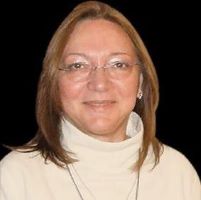
Obituary - Roxana Dascalu, a 'ball of fire' for Reuters in Romania
Sunday 1 March 2026
Roxana Dascalu, a dynamic “ball of fire” for Reuters during and after the Romanian Revolution which overthrew Communist dictator Nicolae Ceausescu, died in France on February 25 following a long struggle with cancer. She was 69.
Within hours of her death in a clinic in the southern town of Chalabre, near where she had lived for much of the last 15 years, obituaries spread across Romanian media, a mark of how famous Roxana became through her work for Reuters and later as a political activist.
Roxana and her then husband Adrian Dascalu were the key people hired as freelancers by the team of Reuters firemen who came in and out of the country during the overthrow of Ceausescu and his execution on Christmas Day 1989. She was recruited with Adrian by the late Johnny Krcmar, who was first in from Vienna.
Veteran Reuters correspondent Richard Balmforth, who followed Krcmar in, says he first met Roxana one or two days after Ceausescu’s Christmas Day execution.
“She was a great find for Johnny and me and others of the Reuters team who deployed over the days and weeks following. She was sparky, feisty, interested in telling you all about what was going on, and lifting the veil on the bizarre society created by the years of the Ceausescu cult,” Balmforth said.
Peter Humphrey, who set up Reuters first permanent bureau in Romania in 1990, called her a star and a “ball of fire”, a description echoed by all the correspondents who worked with her.
Paul Holmes, another correspondent drafted in to cover the revolution said she was a “whirlwind”.
Humphrey said she was a great talent and a brilliant linguist, skilled at quickly gathering information and opening doors through her network of contacts.
“Roxana was always the brightest and fastest to learn our way of writing. She had great sources and was always fast to dig out the news, always beating the competition,” Humphrey said.
Roxana (née Dumitrescu) had studied to master’s level at Bucharest University in English and French after spending some of her high school education in Switzerland when her diplomat father was assigned there .
In her autobiographical book Chronicles of the East, she said that Reuters had changed her life. "At the end of December ’89 I entered the best school of journalism in the world, working shoulder to shoulder with some of the best hacks on Earth, some of them legends. I was on cloud nine."
Even in the later stages of her illness, she remained feisty and tried to plan for the future. “She was always a live wire, the same old ball of fire. But her new ambitions were failed by her body,” Humphrey said.
Roxana spent her last 15 years visiting and then living in southern France near the Pyrenees with her new husband Radu Tanasescu, a Romanian ceramic artist. They lived in old mill at Rivel near Chalabre. Radu died of cancer almost three years ago.
After a decade with Reuters from she became one of the casualties in a substantial downsizing of the bureau but migrated easily into the PR industry.
She later worked as an independent consultant and civic affairs activist with a mission to protect democracy and Romania’s move towards the European Union against extremist political forces. She was still advising Romanian civic groups and suggesting stories to Romanian media until the end of her life.
On February 13 Roxana became too weak to go ahead with a conference call with around 15 former colleagues planned for the following day.
“Roxana was a formidable, kind and brave woman. One of a kind. Hers was a life well spent,” said Alison Mutler, former AP bureau chief who has spent three and a half decades in Bucharest. “She knew how to live and she also knew how to die, and that is something that will stay with me.”
Her former husband Adrian paid this tribute: “During our 14 years together, Roxana was a constant source of inspiration and support. As a journalist, she was dedicated, passionate, and willing to go the extra mile to get the story…She won the hearts of many with her thoughtful and impactful reporting”.
He said that in recent years she had channelled her energy into civic movements in Romania, working tirelessly to bring about positive change in her community. “Her commitment to social justice and her unwavering optimism were an inspiration to all who knew her,” he said.
The prominent Romanian poet, scholar and activist Radu Vancu issued a statement in which he emphasized the discreet but essential role Roxana had played in consolidating pro-European opinion in Romania.
"When we ask ourselves how Romania has so far resisted the extremist, anti-European assault, it is good to remember people like Roxana.”
He added: “That was her great gift: the strength to gather people, to keep them together, to convince them that no battle for a European Romania is in vain. And it was not in vain,” Vancu said.
At her request, Vancu wrote a Manifest for European Romania. ”This document was signed by tens of thousands, rallied 60 NGOs, sparked street protests, and rekindled hope. It was essential in the outcome of the May 2025 presidential polls when Nicusor Dan won,” said her close friend and colleague Diana Voicu.
“She was bright and extremely well-informed and, with her husband Adrian, contributed hugely to the success of our fledgling bureau in revolutionary Bucharest,” said Paul Smurthwaite, who was among the firemen who went in to help cover the revolution.
“I was able to recall those dramatic days in an exchange of messages with her last month. She said she remembered "all the Reuters anglophones I learned so much from”. ■
- « Previous
- Next »
- 1 of 580