People
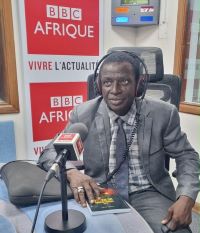
Obituary- Alberto Dabo, who reported Guinea-Bissau's coups and upheaval for three decades
Monday 13 July 2026
(Courtesy of Reuters)
Alberto Dabo, a prolific writer and tenacious reporter who chronicled Guinea-Bissau’s seemingly endless cycle of military coups and drug busts over three decades at Reuters, died in late May after a short illness. He was 66.
Born in Guinea-Bissau before his family sought refuge in Senegal from the liberation war, Dabo studied Romance languages at Cheikh Anta Diop University in Dakar, eventually mastering French, Spanish and English on top of his native Portuguese.
The training set him up for a distinguished career as a translator, press freedom advocate and journalist for Reuters, the BBC and Radio Bombolom FM in Bissau.
"My father worked a lot. He didn't have weekends," his daughter Necha Dabo, 22, said.
"He always preferred to work, create projects, and build his future... And he wanted the world to know everything about Guinea-Bissau."
'THEY ARE SHOOTING'
That commitment often led him to report in perilous situations in a country that has endured decades of instability since winning independence from Portugal in 1974.
His biggest stories for Reuters included the 2009 assassination of President João Bernardo Vieira, the emergence of Guinea-Bissau as a major cocaine trafficking hub and, just last November, the latest military coup that disrupted a presidential election.
"They are shooting," Dabo said calmly in a phone call to the Reuters bureau in Dakar on the morning of November 26, as gunfire crackled in the background. He ticked off the buildings the putschists appeared to be targeting – details he knew from experience would help flesh out a story – before hanging up to seek witness accounts.
"I remember him as being a courageous reporting partner, helping Reuters uncover new facts in a country whose military leaders often didn’t want them published," said Richard Valdmanis, a Reuters editor previously based in the Dakar bureau.
"He had to live daily with the aftermath of what we published together, while I could return safely to Dakar."
MORE THAN COUPS AND COCAINE
Amid the upheaval, Dabo seized opportunities to show his country was more than coups and cocaine.
Reuters colleagues shared fond memories of travelling with him to Guinea-Bissau's cashew farms, to the "graveyard" of colonial-era statues crumbling on the riverbank in the town of Cacheu, and to communities populated by veterans of the independence war, with whom he had excellent rapport.
"If you visited in person, he would always be generous with his knowledge," said former sub-Saharan Africa bureau chief Pascal Fletcher.
"He was the epitome of the veteran Reuters stringer in Africa, always plugged in to developments and ready to give you the no-frills version."
Having experienced successive governments' efforts to clamp down on information, Dabo became an outspoken advocate for press freedom, working with Reporters Without Borders beginning in 2019.
"Alberto Dabo’s passion for journalism and his unwavering desire to give a voice to the voiceless will continue to inspire many generations to come," the group said in a statement.
And he continued to develop as a writer, publishing his first novel last year and his final book, "The Twilight of the Liberators: Guinea-Bissau, Autopsy of a Betrayed Democracy", the month of his death.
"He had a deep commitment to making sure Bissau was heard," said Bate Felix, Southern Africa bureau chief for Reuters, who worked closely with Dabo during multiple postings in Dakar.
"I will miss those follow-up calls, his sometimes noisy way of making sure the newsroom knew he had filed something on Bissau, even when no one had asked him to. Farewell, Dabo. You will be deeply missed." ■
- « Previous
- Next »
- 1 of 613